What's the Difference Between a Chef's Knife and a Santoku Knife?
Origins and Design Philosophy
Chef's Knife
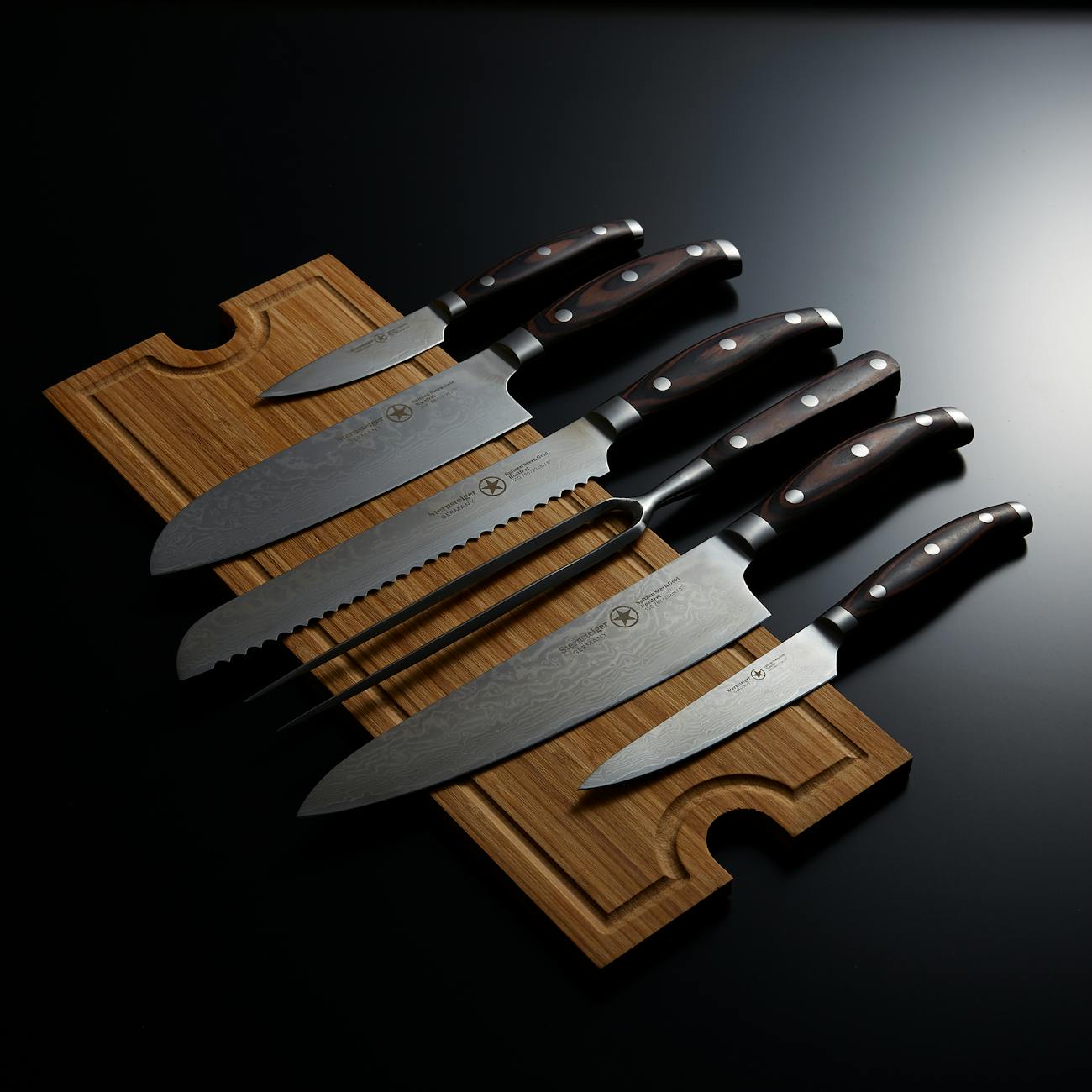
Rooted in Western culinary tradition, particularly French and German knife-making heritage, the chef’s knife features a distinctive curved blade measuring 8–10 inches. Its pointed tip and graceful curve were designed specifically for the rocking motion favoured in European kitchens, allowing chefs to work efficiently through mountains of mise en place.
The blade’s pronounced belly enables a smooth, rolling cut that keeps the tip in contact with the cutting board whilst the handle rises and falls—a technique perfected over centuries of professional cooking.
Santoku Knife
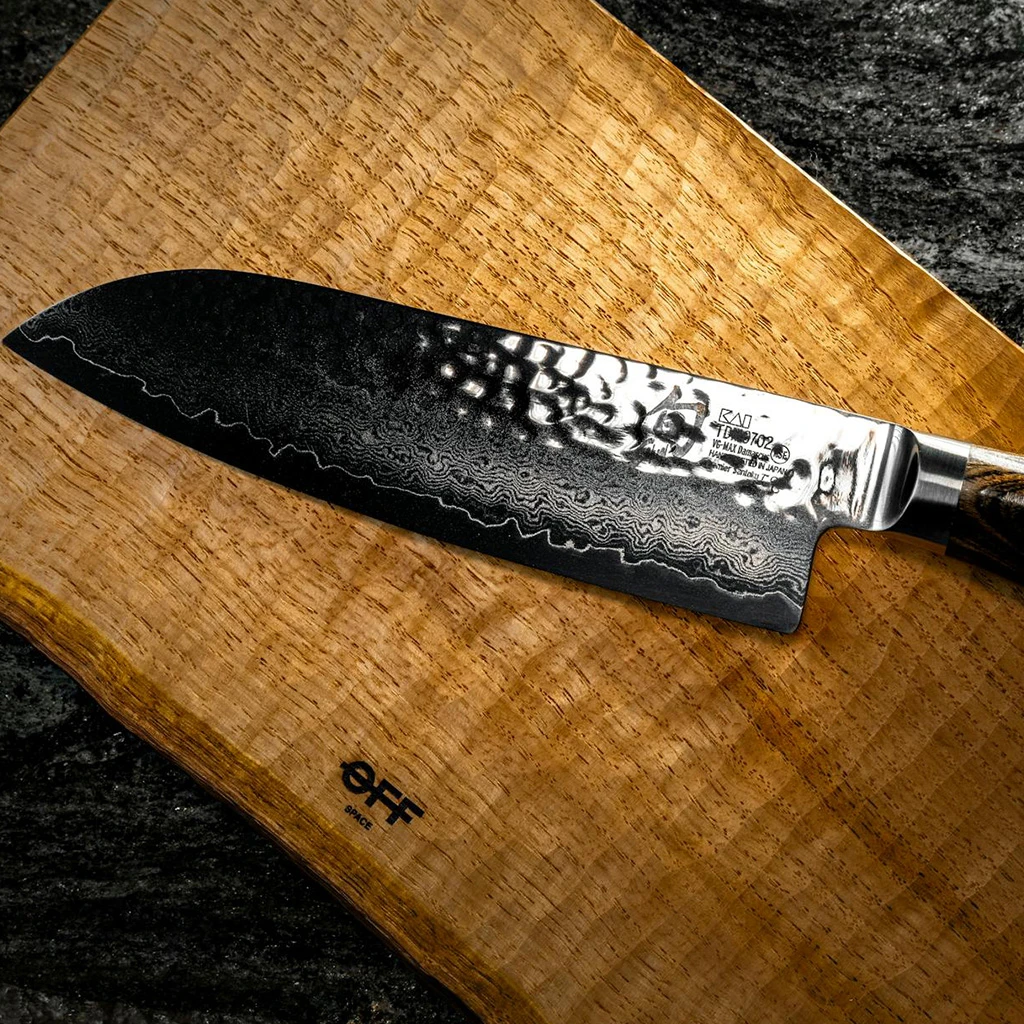
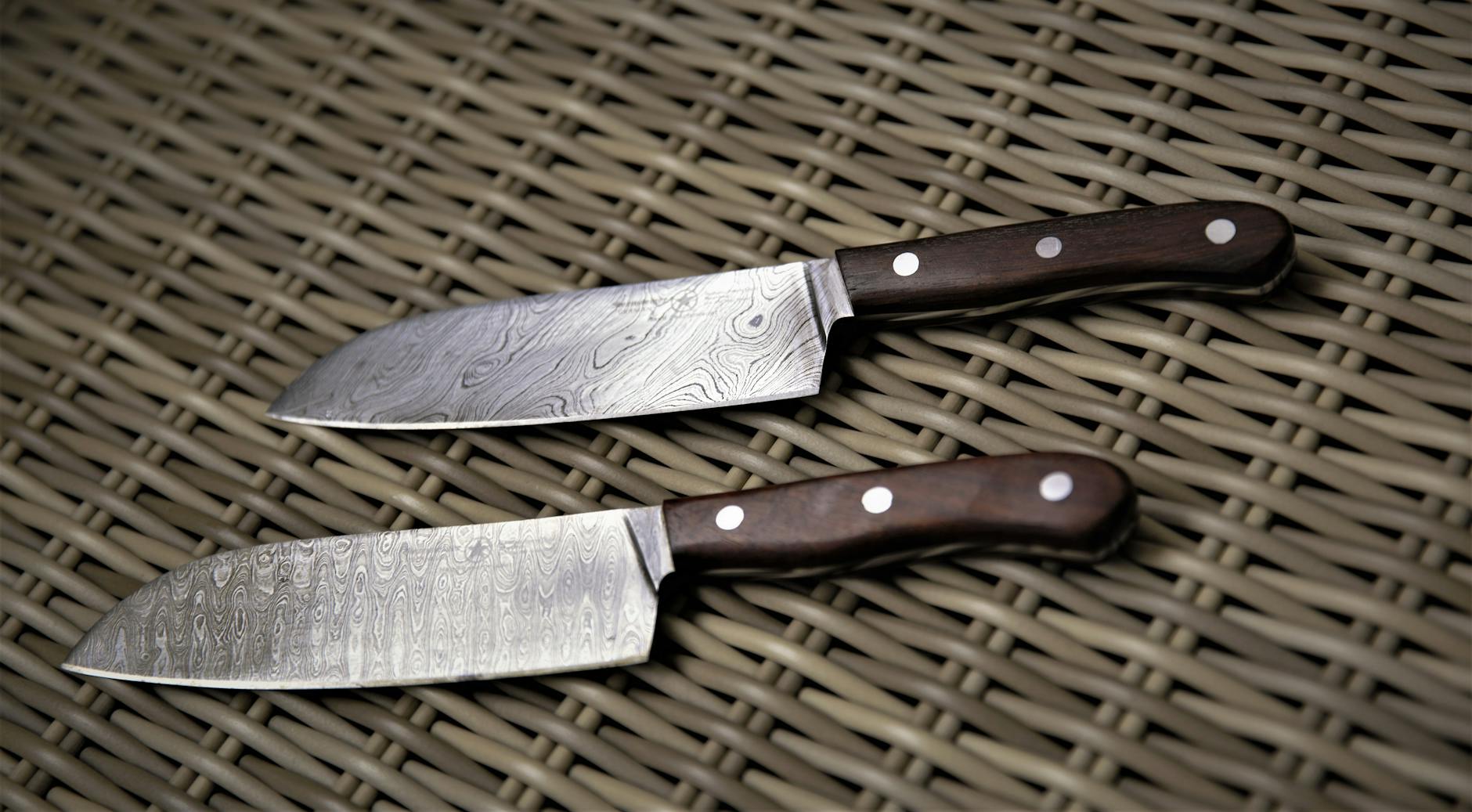
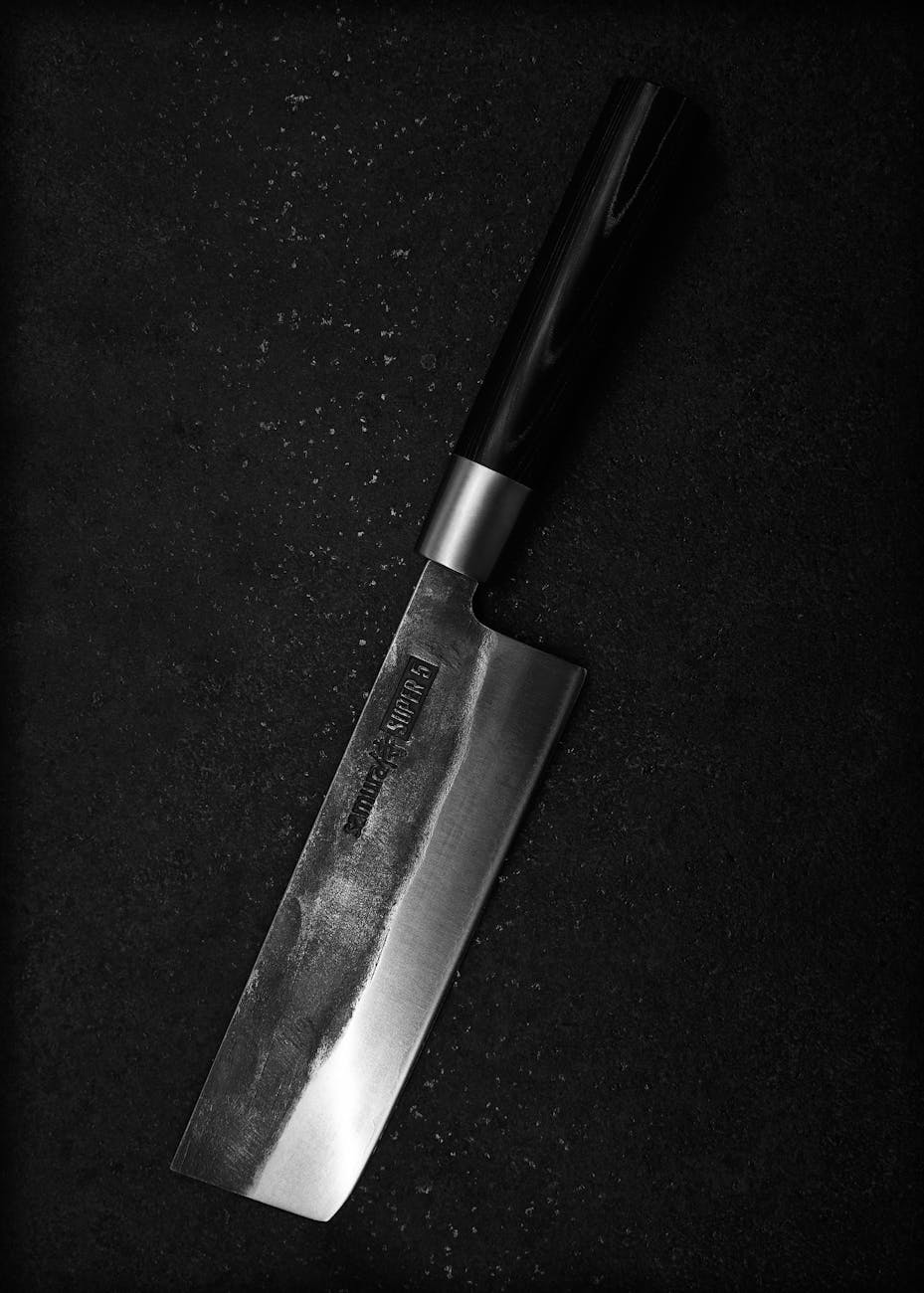
Hailing from Japan, the Santoku literally means “three virtues,” referring to its mastery of slicing, dicing, and mincing. This more compact blade, typically 5–7 inches long, embodies Japanese precision and efficiency in design.
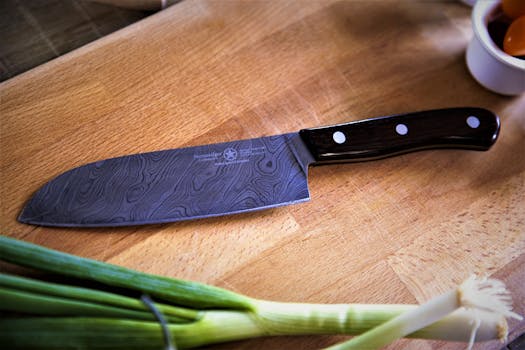
Its straighter edge and distinctive sheepsfoot tip (where the spine curves down to meet the edge) reflect a fundamentally different cutting philosophy. The Santoku was designed for the up-and-down chopping motion common in Asian cooking, where ingredients are prepared with meticulous uniformity.
Blade Geometry and Cutting Technique
Chef's Knife: The Rocker
Santoku: The Chopper
Rocking Motion
Chef’s knife moves on a curved arc for slicing
Chopping Motion
Ideal Applications and User Preferences
Chef's Knife Excels At
- Breaking down large proteins and poultry
- Mincing herbs into fine, uniform pieces
- Detailed work requiring a pointed tip
- Traditional Western cooking techniques
- Tasks demanding a rocking motion
Preferred by Western-trained cooks and those who learned classical French technique, the chef’s knife handles the widest variety of ingredients with confidence. Its versatility makes it the default choice in professional kitchens worldwide.
Santoku Excels At
- Vegetable preparation and julienning
- Creating paper-thin, uniform slices
- Asian-inspired cooking and ingredients
- Controlled, precise chopping work
- Extended prep with less wrist fatigue
Perfect for cooks who prioritise vegetable-forward cuisine or prefer a lighter blade. The Santoku’s intuitive chopping motion makes it an excellent choice for beginners, whilst its precision satisfies experienced cooks who value control above all else.
Expert Insight: “The best knife isn’t determined by origin or tradition—it’s the one that matches your natural cutting style. Do you find yourself rocking the blade or lifting it completely? That simple observation will guide you to your perfect match.”
Making Your Choice: Finding Your Perfect Blade
Choose the Chef's Knife If
You want one truly all-purpose knife for varied cooking tasks, work regularly with proteins and meats, prefer the fluid rocking cut motion, need a pointed tip for detailed work, or learned classical Western cooking techniques.
Choose the Santoku If
You prefer lighter, more manoeuvrable blades, focus primarily on vegetable preparation, want less wrist strain during long prep sessions, favour precise, controlled chopping motions, or find shorter blades more comfortable to handle.
The Perfect Fit
Both knives are remarkably versatile and their capabilities overlap considerably. Many accomplished home cooks and professionals own both, reaching for each depending on the task at hand. There’s no wrong choice—only the right tool for your kitchen.
The truth is, your ideal knife is the one that disappears in your hand, becoming a natural extension of your arm. It’s the blade you reach for instinctively, the one that makes prep work feel effortless rather than tedious.
"Your perfect knife is the one that feels right in your hand and suits your cooking style. Trust your instincts, and the blade will reward you with years of reliable service."